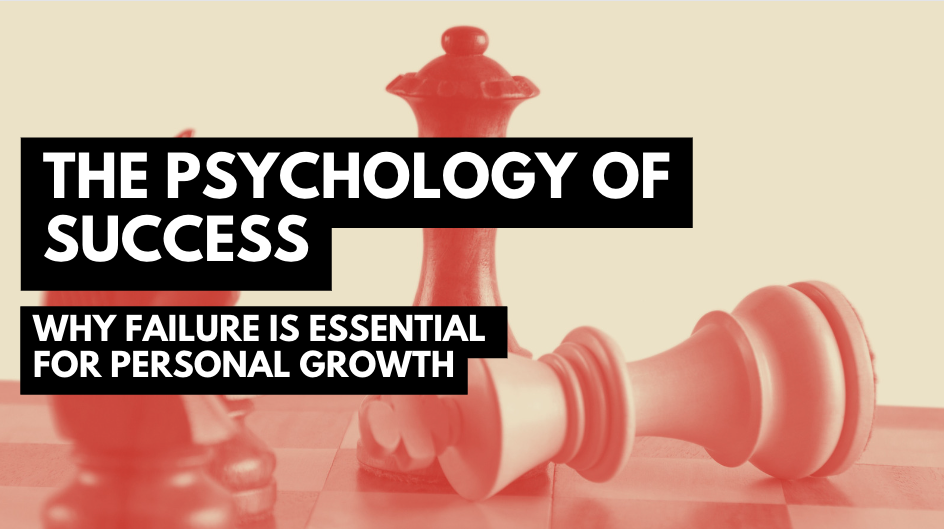
At some point in our lives, we all aspire to be successful. However, success is not a linear path, and failure is an inevitable part of the journey. In fact, failure is not only necessary but essential for personal growth. In this article, we will explore the psychology behind success and why failure is a crucial component of it.
Understanding Success
Success is not a one-size-fits-all concept. What success means to one person may not mean the same to another. Success is a subjective measure, and it varies from person to person. It could mean achieving financial stability, finding love, or even completing a marathon. Regardless of what it means to you, achieving success requires effort, perseverance, and dedication.
Success is a subjective measure that varies from person to person and can mean different things to different individuals.
Achieving success requires effort, perseverance, and dedication.
Success is not a destination but a journey, and it involves taking risks, learning from failures, and constantly growing.
The Role of Failure in Success
Contrary to popular belief, failure is not the opposite of success. In fact, it is an essential part of it. Failure is not a setback but an opportunity to learn and grow. It is through failure that we gain valuable experience, knowledge, and wisdom that we would not have otherwise. Every successful person has experienced failure, and it is what separates them from those who give up.
Failure is not the opposite of success, but an essential part of it. It allows us to learn from our mistakes, gain valuable experience, and grow as individuals.
The fear of failure is a natural human emotion that can prevent us from pursuing our dreams. However, it is important to embrace failure as an opportunity to learn and grow.
Developing a growth mindset is crucial for achieving success. It involves believing that our abilities can be developed through hard work and dedication, and viewing failure as a stepping stone towards success.
The Fear of Failure
Despite the essential role of failure in success, many people fear it. The fear of failure is a natural human emotion, and it can be paralyzing. It is this fear that prevents many people from pursuing their dreams and achieving success. However, it is important to understand that failure is not the end; it is only a stepping stone towards success.
The fear of failure is a common human emotion that can prevent us from taking risks and pursuing our goals.
This fear can lead to procrastination, self-doubt, and a lack of confidence, which can ultimately hinder our success.
To overcome the fear of failure, it’s important to acknowledge it, reframe it as an opportunity for growth, and take small steps towards our goals.
Embracing Failure
To achieve success, we must learn to embrace failure. Instead of fearing it, we should view it as an opportunity to learn and grow. We should take calculated risks, knowing that failure is a possibility, but so is success. By embracing failure, we can develop resilience, determination, and grit, all of which are essential for success.
Embracing failure means accepting that it’s a natural part of the learning process and an opportunity to improve.
It involves reframing failures as lessons, seeking feedback, and reflecting on what went wrong to avoid making the same mistakes in the future.
By embracing failure, we can develop resilience, perseverance, and a growth mindset, which are essential for success.
The Growth Mindset
One of the key characteristics of successful people is the growth mindset. The growth mindset is the belief that we can develop our abilities and intelligence through dedication and hard work. It is the opposite of the fixed mindset, which is the belief that our abilities and intelligence are fixed and cannot be changed. Those with a growth mindset embrace failure and see it as an opportunity to learn and grow.
The growth mindset is the belief that our abilities can be developed through hard work, dedication, and a willingness to learn.
Those with a growth mindset view challenges and failures as opportunities to learn and improve, rather than as indications of their abilities.
By cultivating a growth mindset, we can overcome the fear of failure, develop a love of learning, and achieve our goals.
Success is not a linear path, and failure is an inevitable part of it. Failure is not the opposite of success but an essential component of it. It is through failure that we gain valuable experience, knowledge, and wisdom that we would not have otherwise. To achieve success, we must learn to embrace failure, view it as an opportunity to learn and grow, and develop a growth mindset. With these qualities, we can overcome the fear of failure and achieve success.
Memorial Day is a day of remembrance for those who have died while serving in the United States Armed Forces. It is a day to honor the men and women who have made the ultimate sacrifice for their country. One of the ways in which people honor these fallen heroes is by participating in the Memorial Day Murph.
The Murph is a workout that was created in honor of Lieutenant Michael P. Murphy, a Navy SEAL who was killed in action in Afghanistan in 2005.
The workout consists of:
one-mile run 100 pull-ups 200 push-ups 300 squats one-mile run
*All done while wearing a 20-pound weight vest or body armor.
Greater Love Hath No Man Than To Lay Down His Life For His Brothers
John 15:13
The workout is not only a way to honor the sacrifice of Lieutenant Michael P. Murphy but also a way to pay tribute to all the men and women who have died while serving in the United States Armed Forces. The workout is challenging and requires a lot of physical and mental toughness, just like the challenges that our servicemen and women face every day.
Who is Lieutenant Michael P. Murphy?
Lieutenant Michael P. Murphy was a United States Navy SEAL officer who was awarded the Medal of Honor for his actions during the war in Afghanistan. He was born on May 7, 1976, in Smithtown, New York, and grew up in Patchogue, New York. Murphy attended Penn State University, where he earned his bachelor’s degree in political science and was also a member of the ROTC.
In 1999, Murphy joined the United States Navy and went on to become a Navy SEAL. He was deployed to Afghanistan in 2005 as part of Operation Red Wings. On June 28, 2005, Murphy and three other SEALs were on a reconnaissance mission in the mountains of eastern Afghanistan when they were ambushed by Taliban fighters. Despite being outnumbered and outgunned, Murphy and his team fought back, allowing one of the team members to escape.
During the battle, Murphy was shot several times but continued to fight until he was mortally wounded. He was posthumously awarded the Medal of Honor for his actions, becoming the first member of the United States Navy to receive the award since the Vietnam War.
Why do people participate in the Memorial Day Murph?
People participate in the Memorial Day Murph for a variety of reasons. For some, it is a way to honor the sacrifice of Lieutenant Michael P. Murphy and all the men and women who have died while serving in the United States Armed Forces. For others, it is a way to challenge themselves physically and mentally and push themselves to their limits.
The workout is also a way to build camaraderie and community. Many CrossFit gyms and fitness groups come together to participate in the Murph, creating a sense of unity and shared purpose. The workout is also a way to raise awareness and funds for organizations that support veterans and their families.
In one of it’s more memorable moments it was programmed in the CrossFit games in 2016.
How to prepare for the Memorial Day Murph?
Preparing for the Memorial Day Murph requires a lot of hard work and dedication. It is recommended that participants have some experience with CrossFit or other high-intensity workouts before attempting the Murph.
It is also important to gradually build up endurance and strength in the weeks leading up to Memorial Day. This can be achieved through regular training, including running, pull-ups, push-ups, and squats. It is also important to practice wearing a weight vest or body armor during training to get used to the added weight.
Proper nutrition and hydration are also essential for preparing for the Murph. Participants should consume a balanced diet with plenty of protein, carbohydrates, and healthy fats. Staying hydrated is also important, as the workout can be intense and lead to sweating and dehydration.
The Memorial Day Murph is a challenging workout that honors the sacrifice of Lieutenant Michael P. Murphy and all the men and women who have died while serving in the United States Armed Forces. It requires a lot of physical and mental toughness and is a way for people to push themselves to their limits while building camaraderie and community.
Preparing for the Murph requires hard work and dedication, including regular training, proper nutrition and hydration, and gradually building endurance and strength. By participating in the Memorial Day Murph, we can honor the fallen and show our appreciation for their service and sacrifice.
How tough is the Murph
Determining the level of difficulty of the Murph workout may not be apparent at first glance. It may seem relatively manageable compared to other exercises that require a significant amount of weight or intricate movements. We previously shared an article regarding the most challenging Hero workouts, which you can find here. Surprisingly, “Murph” is the second most popular Hero workout on BTWB, following “DT.”
Completing Murph involves two methods. While beginning and ending with a one-mile run, the 100 pull-ups, 200 push-ups, and 300 air squats can be done sequentially or partitioned. The latter method is the more commonly utilized approach, with participants breaking down the repetitions into 20 rounds of “Cindy,” consisting of five pull-ups, ten push-ups, and 15 air squats. If push-ups prove to be particularly challenging, a partitioned approach that alternates between push-ups and air squats can be adopted. This method allows individuals to work on other movements while simultaneously allowing their push-ups to rest. However, the un-partitioned approach, while more challenging, can result in prolonged rest periods between sets of push-ups.
Furthermore, participants can choose to wear a weight vest or not during the workout. While the prescribed method recommends the use of a vest, individuals who do not have access to one can still participate without it. The completion times differ significantly between the two options, with an average completion time of approximately 49 minutes for men and 53 minutes for women when performing the exercise without a weight vest.
If you would like to put some monetary support and/or purchase a T-shirt to go along with your workout this year, we align with The Murph Challenge.
When it comes to health and fitness, we often focus solely on the physical aspect – working out, eating healthy, and reaching our fitness goals. However, we often overlook the importance of self-awareness in achieving positive long-lasting results.
Self-awareness is the cornerstone of personal growth and development, and it’s especially important in the context of health and fitness. By being self-aware, we can understand our own thoughts, feelings, and behaviors and how they impact our health and wellness. This understanding allows us to take control of our health and make the necessary changes to become the best version of ourselves.
Why is Self-Awareness Important in Health and Fitness?
Self-awareness is crucial in achieving positive long-lasting results in health and fitness for several reasons:
Identifying Limitations and Challenges: Self-awareness allows us to identify our limitations and challenges. This includes physical limitations, mental health issues, or emotional roadblocks that may be holding us back from achieving our goals.
Understanding Motivations: Self-awareness allows us to understand our motivations for pursuing health and fitness goals. By understanding what drives us, we can stay motivated and committed to achieving our goals.
Recognizing Destructive Behaviors: Self-awareness helps us recognize destructive behaviors that may be hindering our progress. This includes unhealthy eating habits, lack of sleep, or stress.
Empowering Ourselves: Self-awareness empowers us to take control of our health and wellness. We become more in tune with our bodies and minds, and we can make healthier choices that benefit us in the long run.
Sustaining Long-Term Success: Self-awareness helps us sustain long-term success in health and fitness. By understanding our own thoughts, feelings, and behaviors, we can create habits that lead to long-lasting positive results.
Tactics for Achieving Positive Long-Lasting Results
Here are five tactics to help you achieve positive long-lasting results in health and fitness through self-awareness:
Practice Mindfulness: Practicing mindfulness allows you to be more present in the moment and aware of your thoughts and feelings. This can help you identify destructive behaviors and make healthier choices. Try practicing mindfulness through meditation, yoga, or simply taking a few deep breaths throughout the day.
Keep a Journal: Keeping a journal can help you become more aware of your thoughts and feelings. Write down what you eat, how you feel after a workout, and any other thoughts or emotions that come up throughout the day. This can help you identify patterns and triggers that may be holding you back.
Seek Feedback: Seek feedback from friends, family, or a fitness coach. Ask for constructive criticism and advice on how to improve your form or technique. This feedback can help you identify areas for improvement and stay on track with your goals.
Take Responsibility: Take responsibility for your actions and choices. Recognize when you make unhealthy choices and take steps to make healthier ones. By taking responsibility, you empower yourself to make positive changes.
Embrace Vulnerability: Be open and honest with yourself and others about your thoughts, feelings, and challenges. This vulnerability can help you connect with others who may be going through similar struggles, and it can also help you overcome obstacles and achieve your goals.
Self-awareness is a crucial component of achieving positive long-lasting results in health and fitness. By being self-aware, we can identify limitations and challenges, understand our motivations, recognize destructive behaviors, empower ourselves, and sustain long-term success. By practicing mindfulness, keeping a journal, seeking feedback, taking responsibility, and embracing vulnerability, we can become more self-aware and achieve our health and fitness goals.
Reaching your fitness goals can be a challenging journey, but with the right mindset and approach, it’s possible to turn your aspirations into reality. Whether you’re looking to lose weight, gain strength, or improve your overall health, consistency, dedication, and a positive attitude are key to success. Here are five tips to help you crush your fitness goals and maintain a healthy lifestyle.
Tip 1: Consistency Is Key
Consistency is the foundation of any successful fitness journey. If you want to achieve your fitness goals, you need to commit to your workouts and stay on track, no matter what. This means making exercise a priority in your daily routine and scheduling it like any other appointment.
Don’t let excuses or setbacks get in the way of your progress. If you miss a workout, don’t beat yourself up. Just get back on track and keep pushing forward. Remember, every little bit of progress counts and adds up over time.
Schedule exercise like any other appointment to stay committed and on track.
Don’t let setbacks get in the way; every little bit of progress counts.
Stay focused on your goals and keep pushing forward, even if you miss a workout.
Tip 2: Find What You Love
One of the most important things to keep in mind when starting a fitness journey is to find an activity that you enjoy. Whether it’s running, swimming, yoga, or weightlifting, choose something that brings you joy and makes you feel good.
When you find an activity that you love, it’s easier to stay motivated and committed in the long run. You’ll look forward to your workouts instead of dreading them, and you’ll be more likely to stick with it over time.
Choose an activity that brings you joy and makes you feel good.
When you enjoy what you’re doing, it’s easier to stay motivated and committed.
Try different activities to find what you love and mix up your routine.
Tip 3: Mix It Up
While finding an activity that you love is important, it’s also essential to mix up your workouts and add variety to your routine. Doing the same exercises day in and day out can lead to boredom, burnout, and plateauing.
To keep your workouts exciting and challenging, try new exercises, switch up your routine, and experiment with different types of workouts. This will help you avoid burnout and see better results over time.
Avoid boredom, burnout, and plateauing by trying new exercises and routines.
Experiment with different types of workouts to keep your muscles guessing.
Add variety to your routine to make it more exciting and challenging.
Tip 4: Rest and Recover
Rest and recovery are just as important as exercise when it comes to achieving your fitness goals. Your body needs time to repair and recover after intense workouts, so make sure to take rest days and give your muscles time to heal.
Overtraining can lead to injury, burnout, and a lack of progress, so listen to your body and take breaks when you need them. This will help you avoid setbacks and make progress toward your goals in a safe and sustainable way.
Take rest days to allow your body to repair and recover after intense workouts.
Overtraining can lead to injury, burnout, and a lack of progress.
Listen to your body and take breaks when you need them to avoid setbacks.
Tip 5: Believe in Yourself
Last but not least, one of the most important things you can do when working toward your fitness goals is to believe in yourself. Celebrate every win, no matter how small, and remember that progress takes time.
Don’t compare yourself to others or focus on what you can’t do. Instead, focus on your own progress and the positive changes you’re making in your life. With a positive attitude and a belief in yourself, you can achieve anything you set your mind to.
Celebrate every win, no matter how small, and focus on your own progress.
Don’t compare yourself to others or focus on what you can’t do.
Believe in yourself and your ability to achieve your goals with a positive attitude.
Achieving your fitness goals takes hard work, dedication, and a positive attitude. By following these five tips, you can make progress toward your goals while enjoying the journey. Remember to stay consistent, find what you love, mix up your workouts, rest and recover, and believe in yourself. With the right approach, you can turn your fitness aspirations into reality and live a healthy, happy life.
Maintaining a healthy lifestyle can be a challenge in today’s fast-paced world. One of the most critical aspects of a healthy lifestyle is maintaining a healthy weight. However, with so many options for fast food and junk food available, it can be challenging to keep track of your food and calorie consumption. This is where tracking your food and calorie consumption comes in.
Tracking your food and calorie consumption is one of the most effective ways to maintain a healthy weight. It helps you become more mindful of what you eat, how much you eat, and how often you eat. Being mindful of what you eat can help you make healthier food choices, and you can identify food items that are high in calories and replace them with healthier alternatives. Additionally, tracking your food and calorie consumption helps you keep track of your portion sizes, which is crucial when it comes to maintaining a healthy weight.
One of the advantages of tracking your food and calorie consumption is that it helps you stay accountable. Recording what you eat makes it less likely for you to indulge in unhealthy food choices. It also helps you keep track of your progress, which can be motivating. When you see the progress you are making, you will be encouraged to keep going.
Tracking your food and calorie consumption can also help you identify your food triggers. Food triggers are the emotions or situations that cause you to overeat. Once you identify your food triggers, you can find healthier ways to deal with them. For example, if stress triggers your overeating, you can try meditation or yoga to manage stress.
Furthermore, tracking your food and calorie consumption can help you plan your meals better. When you know what you are eating, you can create a customized meal plan that suits your dietary requirements. For example, if you are a vegan, you can plan your meals accordingly. Similarly, if you have food allergies, you can avoid foods that you are allergic to.
Tracking your food and calorie consumption can be incredibly beneficial for weight loss.
Here are ten reasons why:
Increases awareness: When you track your food and calorie consumption, you become more aware of what you’re eating and how much you’re eating. This can help you identify areas where you need to make changes.
Identifies patterns: Tracking your food and calorie consumption can help you identify patterns in your eating habits, such as overeating at certain times of the day or when you’re feeling stressed.
Encourages mindful eating: When you track your food and calorie consumption, you’re more likely to pay attention to what you’re eating and how it makes you feel. This can help you develop a healthier relationship with food.
Helps with portion control: Tracking your food and calorie consumption can help you learn what a healthy portion size looks like, which can help you avoid overeating.
Provides accountability: When you track your food and calorie consumption, you’re more accountable for what you eat. This can help you stay on track with your weight loss goals.
Helps with goal setting: Tracking your food and calorie consumption can help you set realistic goals for weight loss and track your progress.
Provides motivation: Seeing progress in your food and calorie tracking can be motivating and help you stay committed to your weight loss goals.
Helps with meal planning: Tracking your food and calorie consumption can help you plan healthier meals and snacks.
Identifies problem areas: Tracking your food and calorie consumption can help you identify problem areas in your diet, such as consuming too many sugary drinks or not eating enough protein.
Provides a sense of control: Tracking your food and calorie consumption can provide a sense of control over your eating habits and help you make healthier choices.
Lose IT
We prefer the LoseIT app. It is a free app with a premium version you can get. Give it a try!
As a society, we often neglect our sleeping patterns and the importance of a good night’s sleep. The quality and quantity of sleep we get can be affected by a range of factors, including stress, environment, and what we consume during the day. In this comprehensive guide, we will explore 10 foods and beverages that may be keeping you awake and preventing you from getting the rest you need.
Coffee: While coffee is a staple in many people’s morning routines, the caffeine content in coffee can interfere with our natural sleep patterns. Caffeine stimulates the central nervous system and can stay in our bloodstream for up to six hours, making it important to limit our caffeine intake throughout the day, especially in the evening.
Alcohol: While alcohol may make you feel drowsy, it can actually have the opposite effect on your sleep patterns. Alcohol can disrupt the natural sleep cycle, causing frequent awakenings and reducing the overall quality of sleep. It’s important to limit alcohol intake, especially before bed.
SpicyFoods: Spicy foods may be delicious, but they can also cause heartburn and indigestion, leading to discomfort and restlessness during the night.
Dark Chocolate: While dark chocolate has many health benefits, including improving brain function and reducing inflammation, it also contains caffeine and theobromine, both of which can interfere with our sleep patterns.
Energy Drinks: Similar to coffee, energy drinks are high in caffeine and can cause insomnia and restlessness if consumed too close to bedtime.
Soda: Soda is high in sugar and caffeine, both of which can keep us awake and disrupt our natural sleep patterns.
Fatty Foods: Foods high in fat can take longer to digest, leading to discomfort and indigestion during the night, making it difficult to get a good night’s rest.
Red Meat: While red meat is a great source of protein, it can also take longer to digest, leading to discomfort and restlessness during the night.
Tea: While tea is a great alternative to coffee, it still contains caffeine, which can interfere with our natural sleep patterns. It’s important to choose decaffeinated tea, especially in the evening.
Water: While staying hydrated is important for our overall health and well-being, drinking too much water before bed can lead to frequent awakenings and disrupt our natural sleep patterns. It’s important to stay hydrated throughout the day but limit water intake before bedtime.
In conclusion, while we may enjoy consuming some of these foods and beverages, they may be interfering with our natural sleep patterns and preventing us from getting the rest we need. It’s important to be mindful of what we consume throughout the day and make adjustments to our diets if necessary to ensure a good night’s sleep.